Cheap evaluations are still leveraged trading products wrapped in a challenge fee. The CFTC forex fraud advisory is worth reading before trusting any low-cost trading offer.
The cheapest prop firm challenge you can find will cost you around $30 to $50 for a small account. That is the entry point. From there, prices scale up to $100 to $200 for mid-range accounts and $400 to $600 for the full $100,000 evaluations. But price is only part of the equation, and chasing the cheapest option without checking the rules is a guaranteed way to waste even a small amount of money.
Here is the truth about cheap prop firm challenges. Some are genuinely good value. Others are cheap for a reason. Knowing the difference is what separates a smart purchase from a donation.
Key Takeaways
- The cheapest prop firm challenges start around $30 to $50 for small accounts, but the rules and profit splits vary significantly between firms.
- Price should not be your only criterion. Drawdown type, profit target, and payout terms matter more than saving $20 on the evaluation fee.
- Very cheap challenges from unknown firms carry higher risk of the firm collapsing before you get paid.
- The best value comes from matching the account size to your trading style and choosing a firm with reasonable rules at a competitive price.
On This Page
What Do Cheap Prop Firm Challenges Actually Cost?
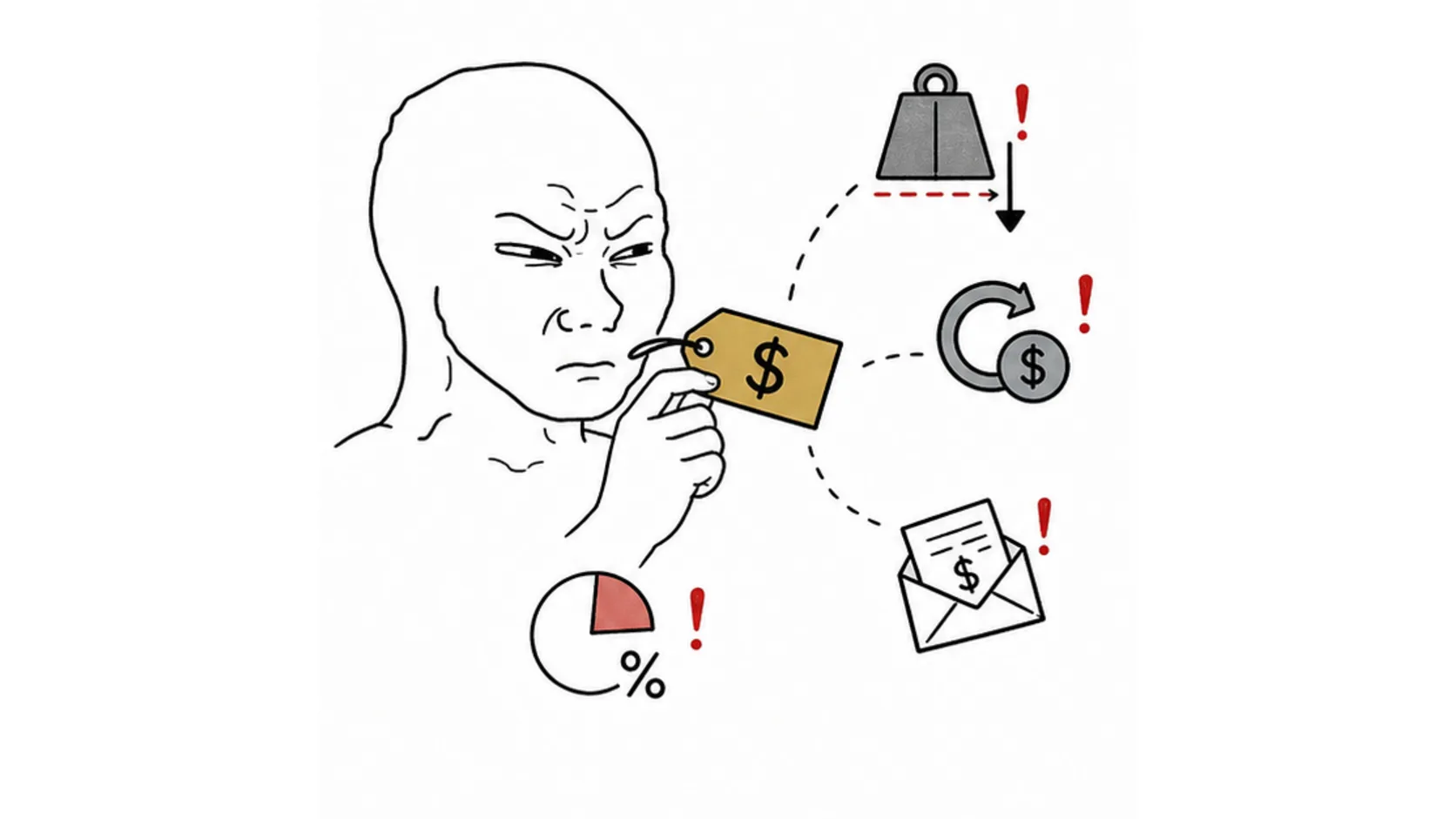
These are the actual numbers so you know what you are working with.
Micro and mini accounts ($10,000 to $25,000): These are the cheapest prop firm challenges available. Expect to pay $30 to $80. The account sizes are small, which means lower profit potential, but the barrier to entry is genuinely low.
A $10,000 account with a $30 evaluation fee is the cheapest legitimate entry point in the industry. If you are testing whether prop firm trading is for you, this is where to start.
Standard accounts ($50,000): The most popular tier. Prices range from $150 to $350 depending on the firm. This is where the real value competition happens. Some firms offer $50,000 evaluations for under $150 during promotions.
Large accounts ($100,000 to $250,000): These cost $350 to $600+ at established firms. The cheapest prop firm challenge at this tier will typically be around $300 to $400, usually from newer firms trying to build market share.
The price differences between firms at the same account size are not random. They reflect differences in rules, payout terms, and how long the firm has been operating. A $150 challenge from a reputable firm with fair rules is better value than a $100 challenge from an unknown firm with hidden restrictions.
What to Check Beyond the Price Tag
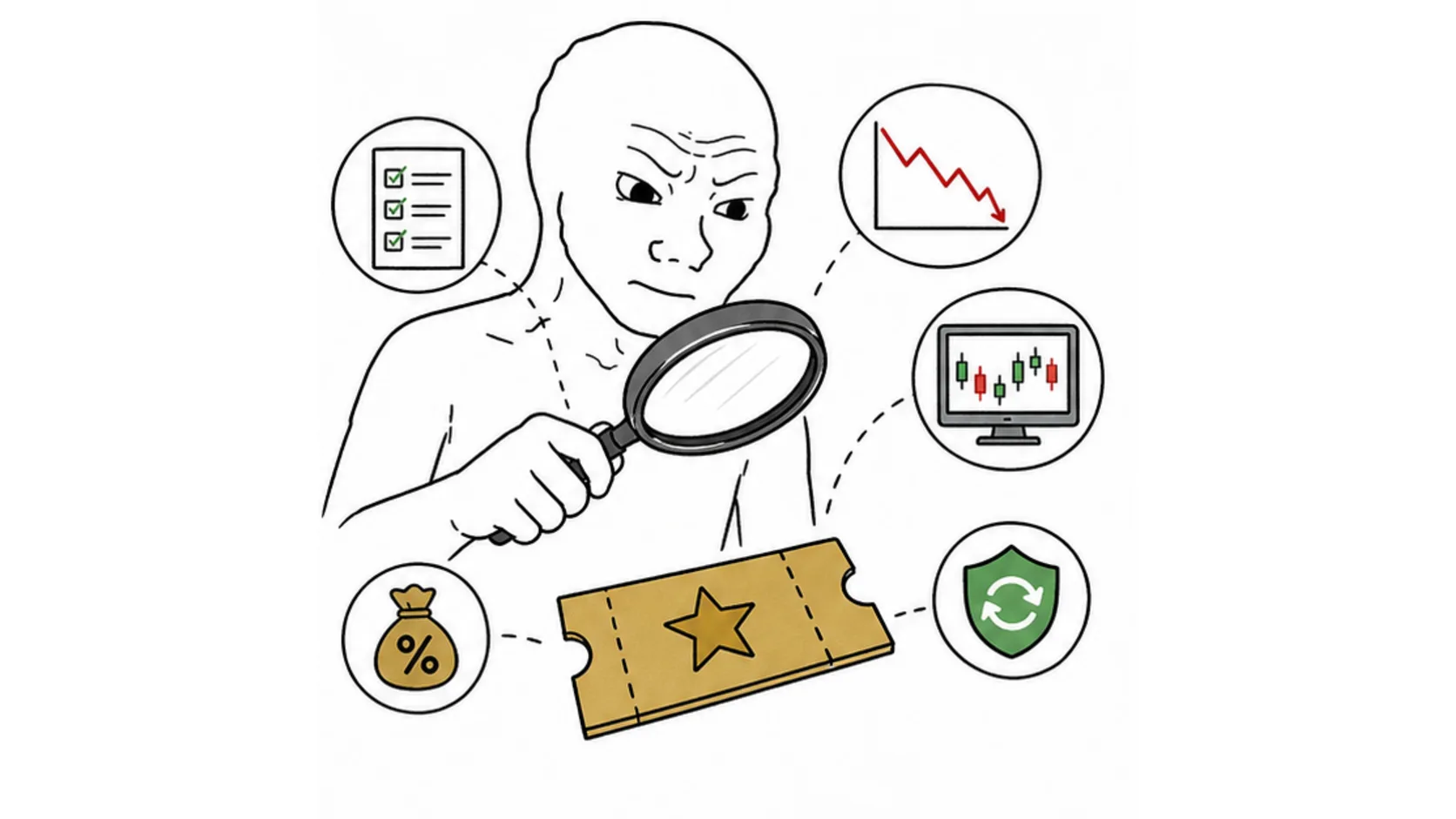
This is where most people mess up. They find the cheapest challenge, pay, and then discover the rules make it nearly impossible to pass. Here is what to check before you click buy.
Profit target percentage. This is the single most important number after the price. A firm offering a $100 challenge with a 10% profit target requires $10,000 in profit on a $100,000 account. Another firm might charge $120 but only require a 6% target, which is $6,000. The cheaper challenge is actually harder to pass.
Drawdown type and size. Static drawdown is more forgiving than trailing drawdown. A firm with a 5% static drawdown gives you a fixed floor. A firm with a 5% trailing drawdown raises the floor every time you make money, shrinking your safety cushion. Always check which type you are getting.
Daily loss limit. The daily loss limit determines how much damage one bad session can do. A 5% daily loss limit on a $50,000 account means $2,500 is the most you can lose in a day. A 3% limit means $1,500. Tighter limits protect you but also restrict your trading flexibility.
Payout speed and first payout. Some firms pay within 14 days. Others make you wait 30 days for your first withdrawal. If cash flow matters to you, payout speed is a real factor in the total value calculation.
Profit split. The standard is 80/20 in your favour. Some cheaper firms offer 70/30 or even lower to offset their lower evaluation fees. Over months of trading, a worse profit split costs you far more than the $50 you saved on the evaluation.
How to Get the Best Value From Your Evaluation
Getting the best value is not about finding the absolute cheapest prop firm challenge. It is about maximising what you get for what you pay. Here is how.
Use promotional discounts. Most firms run promotions throughout the year. Black Friday, holiday sales, and anniversary events can knock 20% to 50% off evaluation fees. A $300 evaluation at 30% off becomes $210. Waiting for a sale on a good firm is smarter than buying a cheap challenge from a mediocre one.
Look for affiliate codes. Many trading educators and communities have negotiated discounts with prop firms. These codes typically save 5% to 15%. Stack an affiliate code on top of a promotional sale and the savings compound.
Start smaller than you think. There is no shame in starting with a $25,000 account at $50 instead of jumping straight to a $100,000 account at $400. Pass the small one first. Prove to yourself that the process works. Then upgrade. The total cost of failing a $50 challenge is $50. The total cost of failing a $400 challenge is $400.
Check the scaling plan. Some firms let you increase your account size over time without buying a new evaluation. If you can start small and scale up through consistent performance, the entry price matters less because you are not paying for larger accounts upfront.
Compare total cost of ownership. The evaluation fee is just the start. Factor in the profit split, payout fees, and any monthly subscription costs. A $100 evaluation with a 70/30 split costs you more over six months than a $200 evaluation with an 80/20 split if you are profitable.
When Cheap Is Too Cheap
There is a line where cheap becomes suspicious. Here is how to spot it.
New firms with unbelievable prices. A firm launched two months ago offering $100,000 challenges for $99 with 90/10 splits and same-day payouts is not being generous. They are being reckless. Firms that price too low cannot sustain their payout obligations when funded traders start withdrawing.
Over 80 prop firms collapsed between 2023 and 2025. Many of them were the ones offering the cheapest challenges with the most generous terms. The survivors were the ones with sustainable pricing.
Hidden rules discovered after purchase. Some cheap challenges have rules that are not clearly disclosed on the sales page. You buy the evaluation, start trading, and discover there are additional consistency requirements, news trading restrictions, or holding period rules that make passing much harder than it appeared.
No verifiable payout history. If a firm cannot show real payout records from funded traders, the cheapest challenge in the world is still a bad deal. You are not saving money. You are paying for something that may never produce a return.
Too-good referral programs. Some firms offer free challenges if you refer friends, but the referral commission structure is so generous that the firm is clearly funding itself through recruitment, not trading. That is a pyramid structure, and it always collapses.
How to Pass a Budget Prop Firm Challenge
Whether you paid $50 or $500, the approach to passing is the same. Here are the principles that matter most.
Respect the daily loss limit like your life depends on it. The daily loss limit is the rule that ends more challenges than anything else. You can have the best strategy in the world, but if you blow through the daily loss limit on day three, the challenge is over. Calculate your maximum position size based on the daily loss limit, not on your account balance.
Trade less, not more. The traders who pass cheap prop firm challenges are not the ones taking 30 trades a day. They are the ones taking 3 to 5 high-quality setups and managing them carefully. Each trade is a risk event. Fewer trades means fewer opportunities to make a mistake.
Focus on consistency over speed. Unless your challenge has a time limit, there is no rush. Making $50 a day for 20 days on a $25,000 account with a 4% target is $1,000. That is a pass. Slow and steady wins the challenge.
Do not revenge trade. You lose $100 on a trade. You immediately enter another position to "get it back." That is a revenge trade, and it is the fastest way to fail any challenge at any price point. Close your platform. Walk away. Come back tomorrow.
The cheapest prop firm challenge is the one you pass. The most expensive one is the one you fail, regardless of what you paid for it. Choose wisely, trade carefully, and the price of entry becomes irrelevant compared to the value of a funded account.